
 VDA LLC
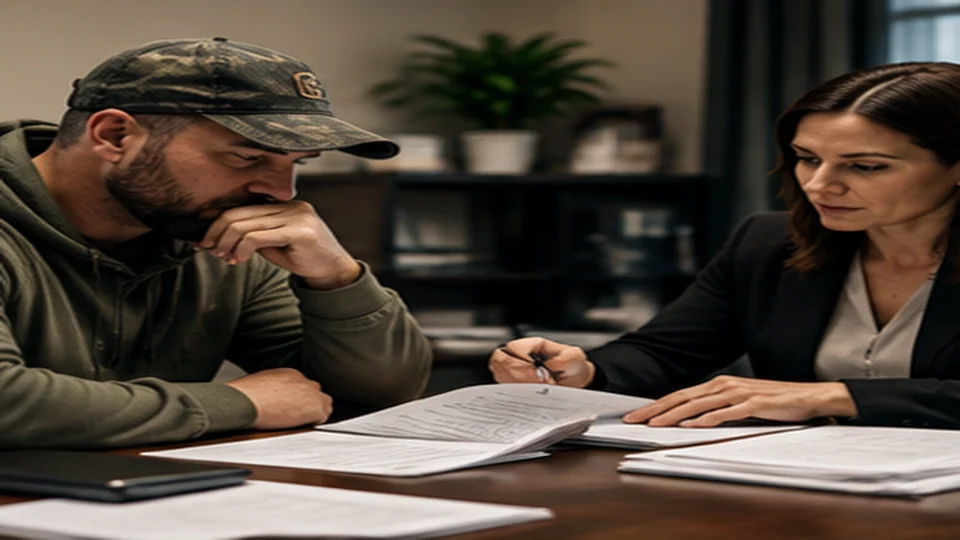
Choosing the wrong review lane can waste months. Learn how to distinguish a record-based error from a case that needs new and relevant evidence. The outcome of a VA disability claim depends on the specific evidence, the governing regulation, and the procedural history. This guide explains the practical questions to examine before deciding what to file.
Start with the actual reason VA denied the claim
A decision review is not simply a request for VA to look again. The question is what was wrong with the prior decision and what kind of review can legally correct it. Read the evidence list, favorable findings, reasons for denial, and notice date. If VA ignored favorable evidence already in the file, an error-focused review may be appropriate. If the file lacked a competent medical link, an evidence-building review is usually the better fit.
A favorable finding that a veteran has a current diagnosis does not necessarily establish the in-service event or the medical relationship to service. Separating these elements avoids appealing the wrong issue. Identify each contested issue by the decision date, because different conditions in the same decision can call for different strategies.
What Higher-Level Review can and cannot do
A Higher-Level Review, requested on VA Form 20-0996, asks a senior adjudicator to review the evidence that was before the earlier decision-maker. It does not permit new evidence. A written argument pointing to documents already in the record is different from introducing a new medical report. The reviewer can correct factual or legal mistakes, disagree with the earlier evaluation, or identify a pre-decisional duty-to-assist error.
A common misconception is that every Higher-Level Review must allege clear and unmistakable error. It does not. CUE is a distinct, demanding standard for revising certain final decisions; ordinary Higher-Level Review can address other errors and differences of opinion. An informal conference is optional and is meant to identify errors, not supply new evidence. It may add time.
When a Supplemental Claim makes more sense
A Supplemental Claim, generally filed on VA Form 20-0995, is designed for new and relevant evidence. New means not previously part of the actual record; relevant means tending to prove or disprove a matter at issue. A private nexus opinion addressing a deficient VA examination, missing treatment records, or a detailed witness statement can change the evidentiary picture.
The new evidence must address the actual reason for denial. Another copy of an already-considered diagnosis may add nothing if VA accepted the diagnosis but denied the causal link. A clinician's opinion should identify the relevant medical history, explain the reasoning, and address contrary evidence rather than merely state that a disability is 'related to service.'
Practical takeaway: Before choosing a review option or submitting more evidence, compare the rating decision with the records VA actually considered. The most useful next step addresses the precise missing legal or factual element.
Deadlines and preserving the effective date
For most modern VA compensation decisions, seeking an eligible review option within one year can maintain continuous pursuit under 38 C.F.R. § 3.2500, subject to the rules governing the sequence of review options. A Supplemental Claim can also be filed after a year, but the effective-date consequences can be substantial. Do not assume that filing years later automatically preserves the date of the first claim.
A Higher-Level Review is generally available after an initial or Supplemental Claim decision, not as an immediate repeat HLR of the same issue. Following an HLR decision, a Supplemental Claim or Board appeal may be available. The correct sequence matters. Read the decision notice and preserve proof of timely filing.
A practical decision example
Suppose VA denied service connection because the examiner claimed there was no in-service injury, even though the service treatment record documenting that injury was in the file. An HLR can focus on that factual mistake and the examiner's inaccurate premise. By contrast, if VA acknowledged the injury and diagnosis but found no medical nexus, a new well-supported medical opinion may make a Supplemental Claim more productive.
Sometimes the decision contains both problems: a missing examination and inadequate evidence of the relationship. A representative should identify what existed before the decision, what VA should have developed, and what additional evidence is now available. There is no universal best appeal lane.
How to prepare a focused review
Build a one-page issue chart identifying the condition, decision date, favorable findings, disputed element, and supporting evidence. For HLR, cite the existing record precisely: examination date, treatment note, personnel record, or regulation. For a Supplemental Claim, identify what evidence is genuinely new and explain how it resolves the gap. Keep separate claims and issues clearly identified.
Do not overlook the Board of Veterans' Appeals. Its Direct Review, Evidence Submission, and Hearing dockets have different evidence rules. Choosing between them can be as consequential as choosing between HLR and Supplemental Claim.
Questions to ask before you file
- What exactly did VA concede in its favorable findings, and what element remains disputed?
- Which evidence was already in the record when VA made the decision?
- Is the issue a legal or factual mistake, missing development, or a genuine lack of supporting evidence?
- What is the date of the decision notice, and which review deadline applies?
- Would the proposed evidence answer the specific reason VA gave for its decision?
Official rules and further reading
The primary authorities and VA guidance below provide a starting point. Regulations and interpretations can change, and the law applicable to an older decision may differ from the law currently in effect.
- va.gov/decision-reviews/higher-level-review/
- va.gov/decision-reviews/supplemental-claim/
- ecfr.gov/current/title-38/chapter-I/part-3/section-3.2500
Related VDA resources
VA disability rating calculator · VA back-pay calculator · claims and appeals assistance · contact VDA LLC ·
This article provides general information, not a determination of entitlement in any individual case. VDA LLC provides assistance through VA-accredited claims agents.